

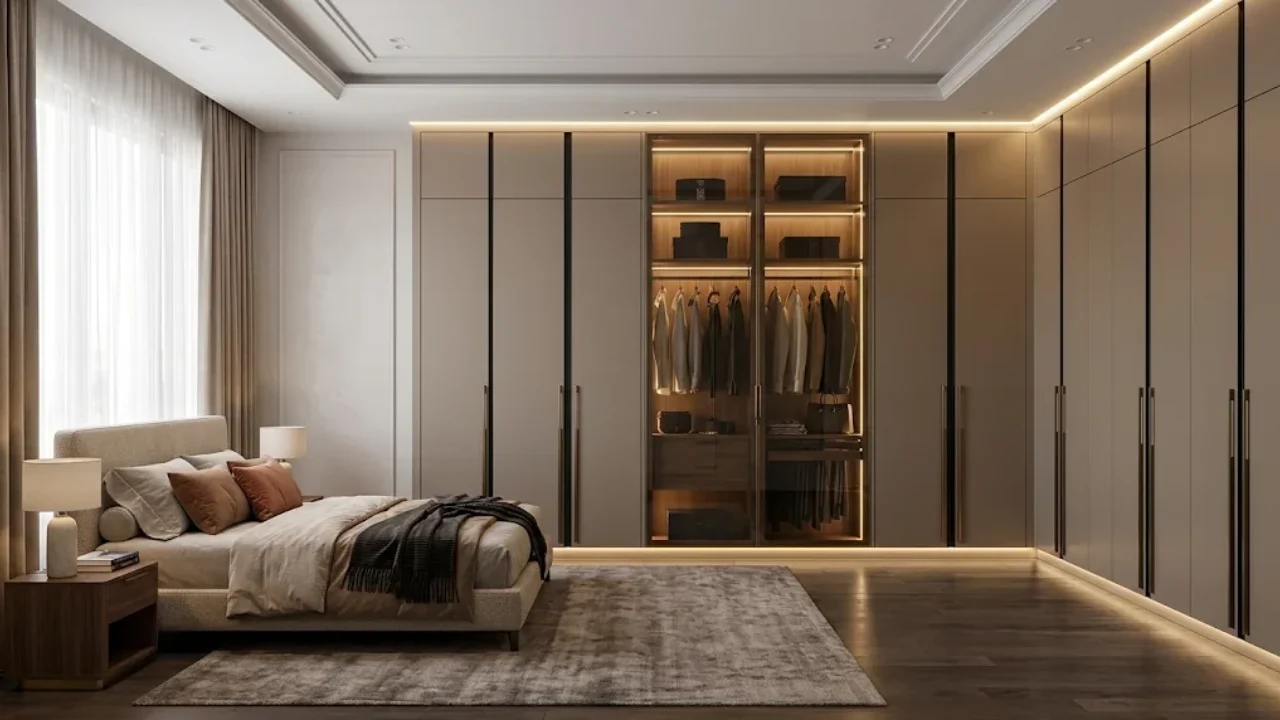

Ask three Dubai joinery companies to price a 3.5-metre bedroom wardrobe. You will not get three similar numbers. Published 2026 guides put custom wardrobes anywhere from about AED 1,200 per linear metre to more than AED 14,000. That is not a typo, and it is not a scam. It is the gap between a melamine carcass with basic hinges and a veneered, lit, fully fitted unit with imported hardware.
Custom joinery in Dubai is furniture built to your exact room, by a factory that works from approved drawings and finishes it in a controlled space. Quality comes down to four things: the core material, the finish, the hardware, and the installer. Price follows those four.
The short answer
This guide shows you how the whole process works, what each material really does in Dubai’s heat and humidity, what each room costs, and how to spot a weak quote before you pay a deposit. Read it once and you will know what to ask.
Key Takeaways
- Custom joinery is built to fit your space. Ready-made furniture is built to fit a catalogue.
- Joinery is priced mostly per linear metre. Core board, finish and hardware set the rate.
- Moisture-resistant boards and marine plywood matter more in kitchens and bathrooms than any finish.
- Approved shop drawings are your best protection. No drawings, no deal.
- Most of the risk sits in the details: edge sealing, hinges, site measurement and installation.
What Is Custom Joinery (and Why Dubai Buyers Are Choosing It)
Custom joinery means built-in or made-to-measure woodwork. Kitchens, wardrobes, TV walls, desks, shelving, wall panels and doors are included. It is designed for one room and made for one client.
Bespoke furniture goes one step further. It covers freestanding pieces such as tables, consoles, beds and seating, drawn around your taste and proportions rather than adapted from a catalogue.
Demand is rising for a simple reason. Gulf News reported in 2026 that more UAE residents are investing in bespoke furniture and personalised interiors as they settle in for the long term. Khaleej Times made a similar point in July 2026. Buyers want long-term value, not just a polished show flat.
There is also a practical reason. Dubai apartments and villas rarely have standard alcoves, ceiling heights, or column positions. A ready-made wardrobe leaves gaps. A made-to-measure one uses the full height and width. Several UAE makers say the same thing. Fit is the main benefit, and the finish is second.
So what actually happens between your idea and the finished unit? That is where quality is won or lost.
From Sketch to Site
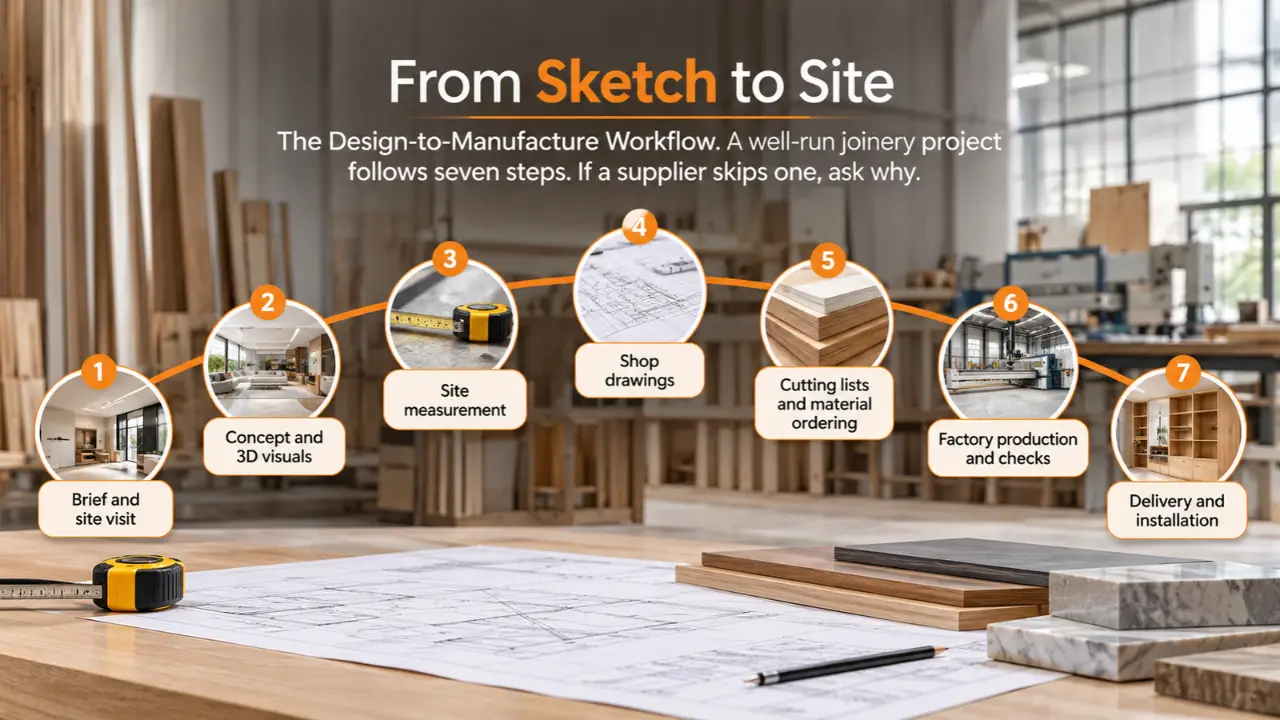
The Design-to-Manufacture Workflow. A well-run joinery project follows seven steps. If a supplier skips one, ask why.
- Brief and site visit: The designer or sales engineer visits. Checks the space and notes socket positions, air-conditioning outlets, plumbing, and access routes for delivery.
- Concept and 3D visuals: You see layouts, finishes, and proportions before any wood is cut.
- Site measurement: A technician measures walls, levels and openings. Walls in Dubai buildings are rarely perfectly straight. So this step decides how clean the final joints look.
- Shop drawings: Production drawings show dimensions, materials, hardware, joints, and service cut-outs. You approve them in writing. Treat this as your contract in picture form.
- Cutting lists and material ordering: The factory converts approved drawings into cutting lists, material schedules, and hardware lists.
- Factory production and checks: Panels are cut on CNC machines, edged, finished, and assembled. Good factories pre-assemble units to test hardware alignment before shipping.
- Delivery and installation: Units are fitted on site, adjusted, and handed over after a snag check.
Counterpoint
A faster process is not always a worse one. A simple wardrobe in standard board can move quickly. The warning sign is not speed. It is skipped approvals.
From Which Materials Your Joinery Is Actually Made Of
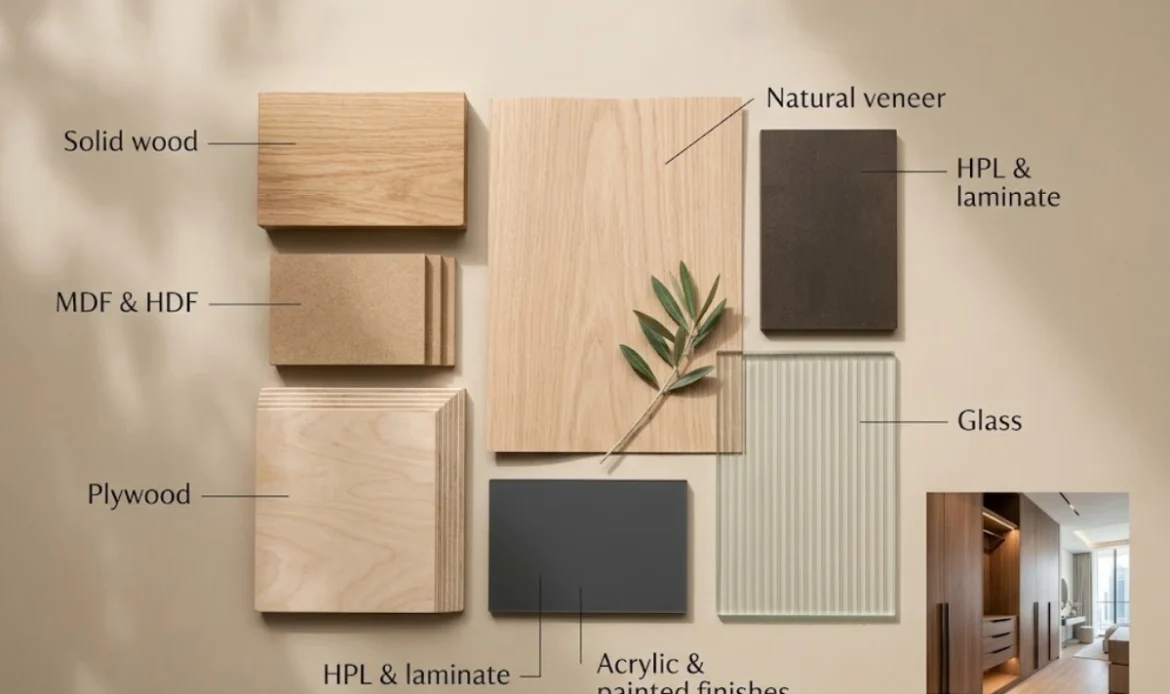
Most buyers choose the finish first. Experienced fabricators say start with the core. The core is the hidden board that decides whether doors stay flat and edges stay sealed.
Core boards
| Core | Best for | Watch out for |
|---|---|---|
| Standard MDF | Dry-area wardrobes, TV units, wall panels | Swells if edges or cut-outs are unsealed |
| Moisture-resistant (MR) MDF | Kitchens, vanities, utility rooms | Still needs edge sealing and good sink-area detailing |
| Marine / BWP plywood | Wet zones, heavy-use carcasses, commercial counters | Higher material cost |
| Solid timber | Statement tables, frames, doors, trim | Moves with humidity; needs expert drying and detailing |
| Chipboard/melamine board | Budget storage | Lower screw-holding strength and shorter service life |
UAE suppliers commonly point to moisture-resistant MDF and marine plywood for kitchens and bathrooms because of local heat, humidity and air-conditioning cycles.
Surface finishes
- Laminates (HPL and melamine): Tough, wide colour range, easy to clean. The default for wardrobes, offices and commercial fit-outs. Quality varies sharply between brands.
- Veneers: A thin slice of real timber on a stable core. You get the grain of walnut, oak or ash without the movement of solid wood. Colour differs between batches, so approve a sample.
- Lacquer (two-pack / PU): A smooth painted finish in almost any colour, matt to high gloss. It looks premium, but needs a dust-free spray booth and careful curing. Ask to see a finished sample door.
- Solid surface and engineered stone: Used for worktops, reception counters, vanities and retail plinths. Seams can be made nearly invisible.
- Mixed materials: Metal, glass, stone, fluted panels and leather inserts. These are common in high-end residential and hospitality work.
Hardware that quiet cost driver
Hinges, drawer runners, lift-ups, handles, and LED drivers wear first. A beautiful door on a cheap hinge will sag within a few years. Ask for brand and model names in the quote. “Soft-close hardware” is not a specification.
What Custom Joinery Looks Like in Practice Room by Room
Every space has its own traps. Here is what matters in each, with links to deeper guides.
Kitchens
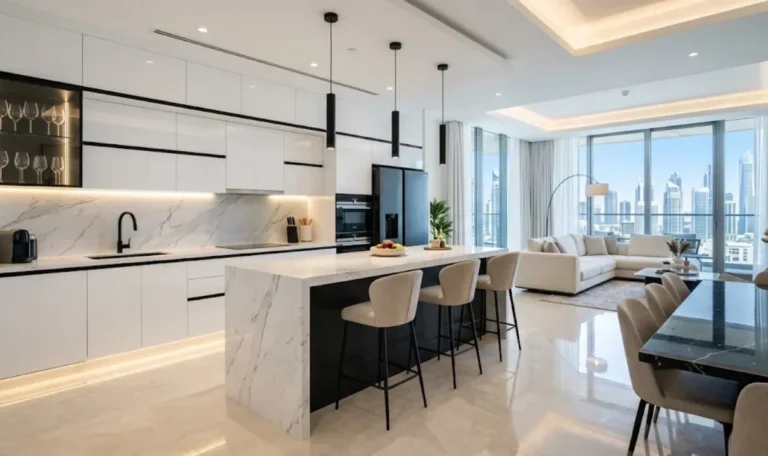
Kitchens are the hardest joinery job because they combine water, heat, grease, appliances and daily abuse. Plan around the sink, hob and dishwasher first.
Insist on moisture-resistant or marine-grade carcasses, sealed edges (especially around sink cut-outs and under taps), and a worktop template taken after the cabinets are fixed.
Wardrobes and walk-in closets
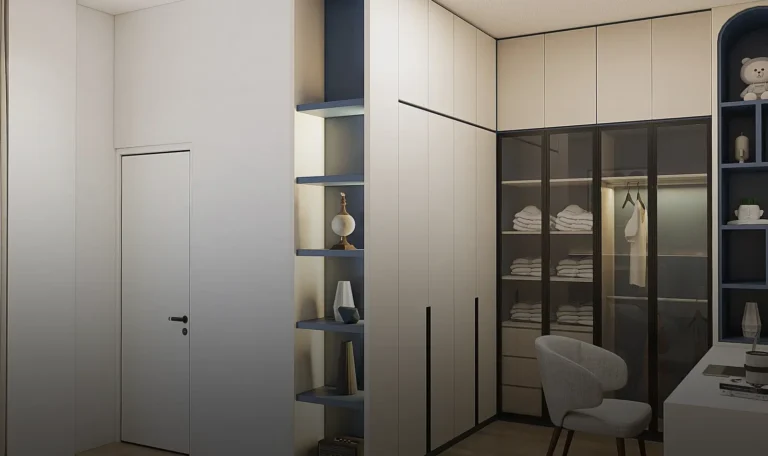
The wardrobe is where most Dubai homeowners meet joinery for the first time. A good design starts with your clothes, not a catalogue. Count hanging length, shoes, folded items, bags and jewellery, then set the internal layout.
Sliding doors save floor space. Hinged doors give full access and are generally simpler to repair. Check the track quality on slides, because that is the part that sticks first.
TV units and media walls
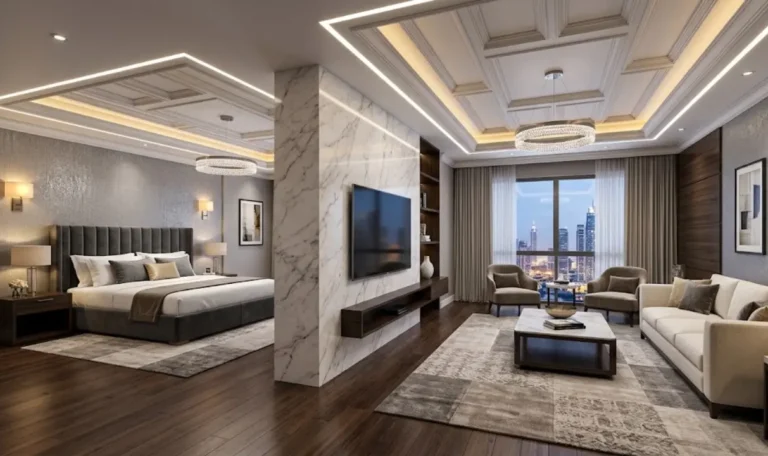
A media wall hides cables, adds storage and sets the visual tone of the living room. The details to plan early: ventilation for equipment, access to power and HDMI points, wall-mount load, and cove or LED lighting.
Reception desks

The reception desk is the first object a visitor touches. It carries your brand, so it needs to hold up to elbows, bags and cleaning every day. Plan cable management, ADA-style height variations where required, branding inserts and a robust top (solid surface or HPL).
Retail displays
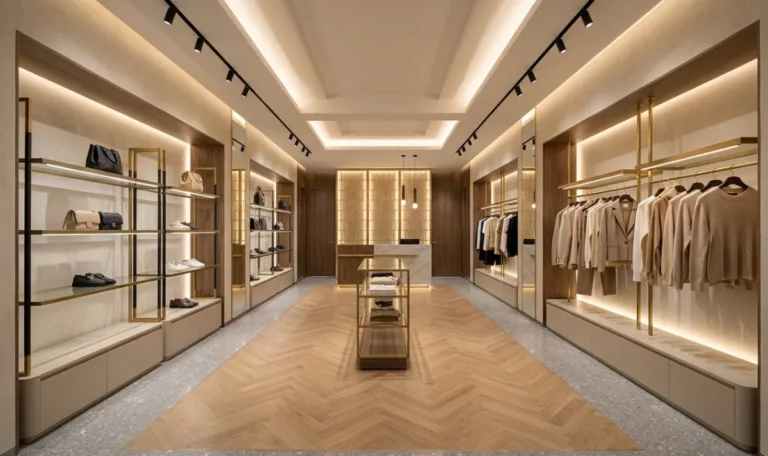
Retail joinery sells product. It must be strong, easy to reconfigure and quick to install, often in a mall fit-out window. Think modular plinths, shelving systems, lighting channels, cash counters and brand-matched finishes.
Restaurant and café furniture
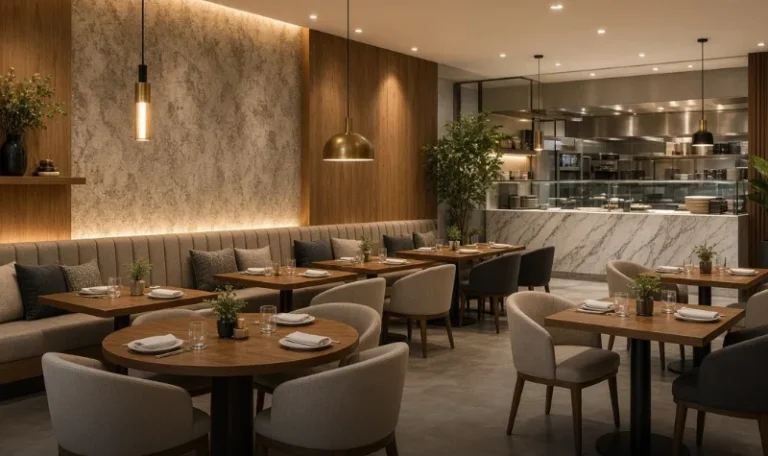
Hospitality joinery faces spills, heat, cleaning chemicals and long hours. Choose washable, impact-resistant surfaces. Check seat comfort, table stability and acoustic comfort. Booths, banquettes, bar fronts and counters all need to survive years of heavy use.
Wall panels and feature walls
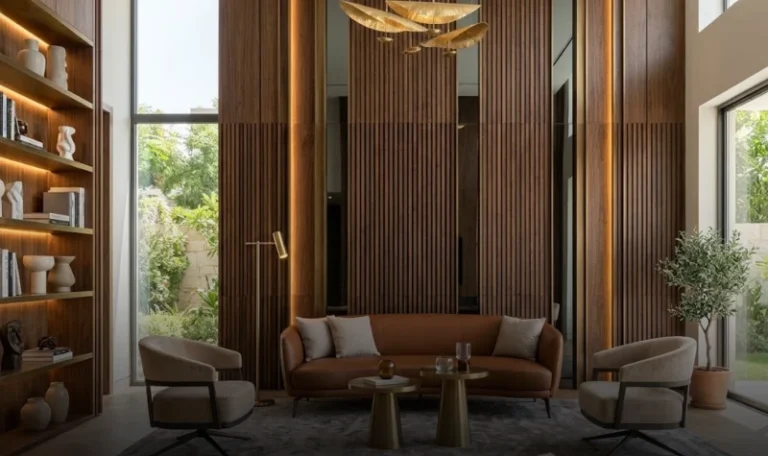
Fluted timber, upholstered panels, stone-look surfaces and framed mouldings add depth fast. Panelling also hides imperfect walls and conceals wiring. Check fire-rating needs for commercial or building-managed spaces.
Quality Is Made Inside the Factory
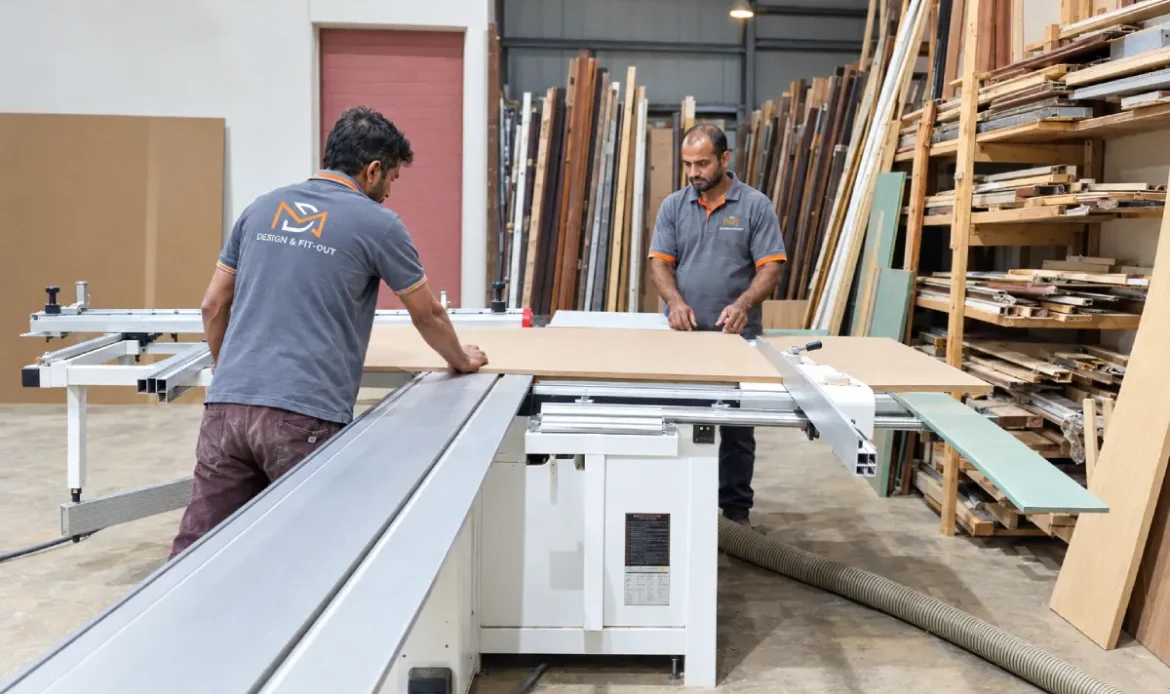
A showroom tells you what a company wants you to see. The factory tells you what you will actually get.
Good joinery factories share several traits:
- CNC cutting for consistent panel sizes and drilling.
- Edge banding with clean, sealed joints, not just glued strips.
- Controlled spray finishing for lacquer, in a dust-controlled booth.
- Pre-assembly checks: Some manufacturers assemble modules in the factory to test hardware alignment and structural stiffness before packing.
- Moisture and storage control: Boards stored flat, away from damp, and delivered in packing that protects edges.
- Labelling and packing so installers do not guess where a panel goes.
Many Dubai makers run their own production units in areas such as Dubai Production City or industrial zones in Sharjah and Umm Al Quwain. In-house production gives tighter control over deadlines and rework than outsourcing to unknown third parties.
Ask this question: “Can I visit the factory or see a unit in production?” A confident maker will say yes. A hesitant answer tells you plenty.
The Quality Checklist
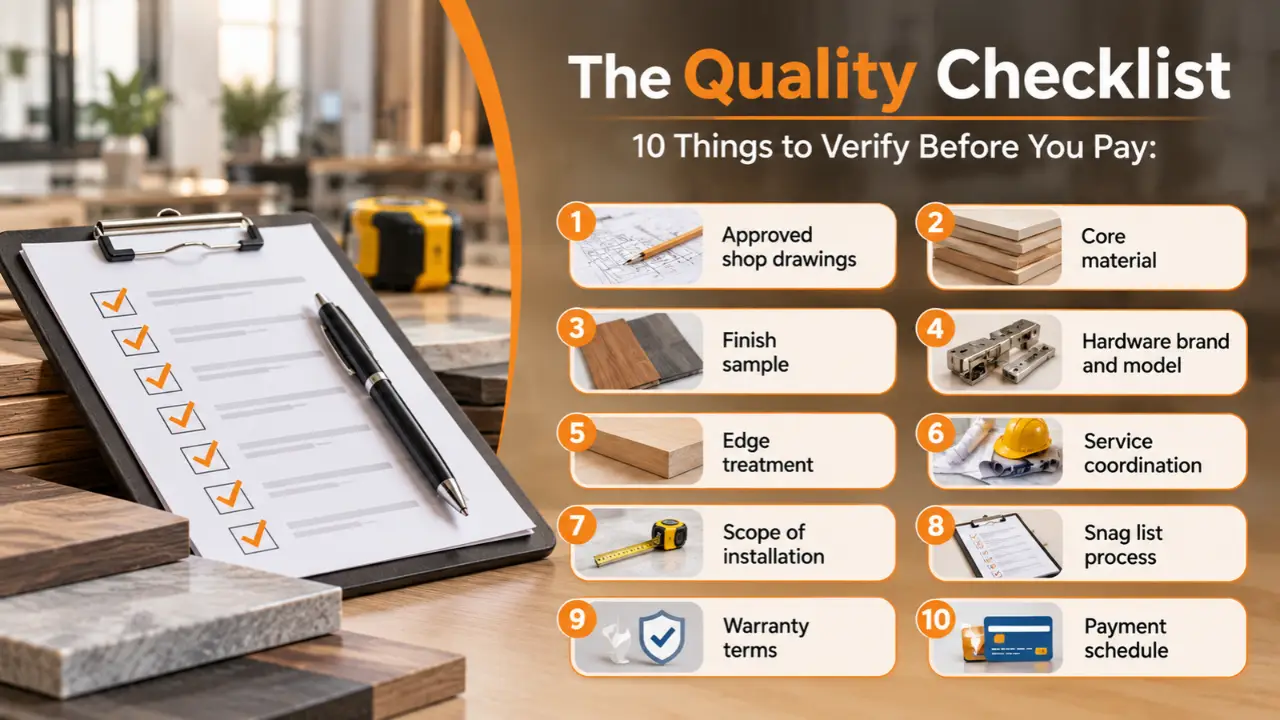
10 Things to Verify Before You Pay:
- Approved shop drawings with dimensions, materials and hardware named.
- Core material stated in writing (MDF, MR MDF, plywood, solid).
- Finish sample you have touched and approved.
- Hardware brand and model listed in the quote.
- Edge treatment sealed with PVC, ABS or equivalent, including cut-outs.
- Service coordination with electrical, plumbing and air-conditioning teams.
- Scope of installation, including who removes packing and debris.
- Snag list process with a time limit for fixes.
- Warranty terms in writing: what is covered, for how long, and what voids it.
- Payment schedule linked to milestones, not just a large upfront deposit.
Red flags
Vague pricing, pressure to decide fast, no samples, no local workshop, and no after-sales presence. Those points show up repeatedly in advice from UAE furniture makers, and they match common sense.
How Much Does Custom Joinery Cost in Dubai? (2026 Ranges)
It depends, and published figures disagree. Use the ranges below as a planning guide, not a quote.
Typical 2026 price ranges found in UAE sources
| Item | Indicative range (AED) | Notes |
|---|---|---|
| Custom wardrobe/built-in | ~1,200 to 3,500 per linear metre (economy to standard) | One 2026 fit-out guide |
| Wardrobe, by tier | Entry 1,800 to 3,500; mid 3,500–6,500; premium 7,000 to 14,000+ per linear metre | A UAE furniture maker’s 2026 guide |
| Bedroom wardrobe, 3 to 4 m | ~12,000 to 25,000 at mid-range | Same maker |
| Walk-in wardrobe (villa master) | ~35,000 to 80,000, up to 200,000+ at premium | Varies by source |
| Bespoke kitchen cabinetry | From ~2,200 per linear metre | Rises steeply with imported lacquer or modular systems |
| Full mid-range kitchen | ~80,000 to 150,000 | Including appliances and worktop scope varies |
| Media wall, floor-to-ceiling | ~12,000 to 28,000 | Premium with solid wood and lighting: ~25,000 to 55,000+ |
Why the spread is so wide: one supplier’s “standard” is another’s “entry level”. A quote that excludes worktops, appliances, lighting or installation will look cheap and then grow.
The six cost drivers
- Size: Linear metres, height and depth. A 3-metre wardrobe costs roughly three times a 1-metre one.
- Core material: Standard MDF, MR MDF, plywood and solid wood sit at very different price points.
- Finish: Laminate is the most economical. Veneer and lacquer cost more. Stone and metal cost more again.
- Hardware: Premium runners, lift systems and integrated lighting add up quickly.
- Complexity: Curves, fluted panels, hidden doors and mixed materials need more labour.
- Site conditions: Access, floor level, wall straightness and working-hours rules in managed buildings.
Joinery inside the whole-project budget
A 2026 Dubai fit-out guide estimates that kitchens, bathrooms, custom joinery and MEP together absorb roughly 55 to 70% of a residential budget. Residential fit-out per square foot ranges from about AED 75 to 150 (economy) to AED 150 to 275 (mid-range) in that guide, with luxury work higher. Other studios quote different bands, so compare like with like.
Custom vs Ready-Made
Custom is not always the right answer.
Choose custom when:
- The space has awkward dimensions or low/high ceilings
- You need storage built into walls
- You want a specific finish or layout
- You plan to stay for years
- A commercial brand needs consistency across locations
Choose ready-made when:
- You rent short-term
- The budget is tight, and the space is standard
- You need furniture this week
Ready-made is faster and cheaper upfront. Custom costs more upfront but fits better and often lasts longer. Several UAE guides argue that cheaper units get replaced or refaced sooner, which erodes the savings.
How Long Does Custom Joinery Take?
Timelines depend on project size, materials, and approvals. Here is a typical flow. Treat the weeks as indicative, and ask your supplier for a written schedule.
| Stage | Typical duration |
|---|---|
| Design, measurement and drawing approval | 1 to 2 weeks |
| Material ordering and factory production | 2 to 6 weeks (longer for veneer, solid timber or imported hardware) |
| Delivery and installation | A few days to 2 weeks |
One Dubai furniture maker quotes 15–30 working days for made-to-order furniture after design confirmation and deposit. Full-home joinery packages take longer.
What slows projects down:
- Late drawing approvals
- Changing finishes after production starts
- Site not ready (wet trades unfinished, floors not laid)
- Building management permit delays
Tip: book installation only after plastering, tiling and painting are finished.
Installation
The Last 5% That Decides Everything. A flawless factory unit can still look poor if the installation is rushed. Good installers work from labelled panels, check levels, scribe units to uneven walls and adjust doors before leaving.
Before the team arrives:
- Clear the room and protect floors.
- Confirm service points are marked and ready.
- Check lift access and working hours with building management.
- Agree who removes waste.
After installation, do a snag walk with the supervisor. Check door alignment, drawer movement, gaps, edge finish, lighting, handles and cleanliness. Photograph issues and send a written list the same day.
Maintenance
That Makes Your Joinery Last 10 Years or More. Dubai’s environment is tough on wood-based products. Air conditioning dries rooms. Humidity returns when it is switched off. Rapid swings stress panels and finishes.
Simple habits help:
- Keep indoor humidity stable. Avoid switching AC off for long periods in empty homes.
- Wipe spills quickly, especially near sinks and dishwashers.
- Use mild cleaners. Harsh chemicals dull lacquer and attack edge banding.
- Avoid direct sun on veneer and timber, which fades and dries.
- Tighten and adjust hinges once a year. Re-align doors early before they wear.
- Do not overload drawers and shelves beyond their rated capacity.
- Check silicone seals around sinks and wet zones every year.
Ask your supplier for a care sheet specific to your finishes.
How to Choose a Custom Joinery Partner in Dubai
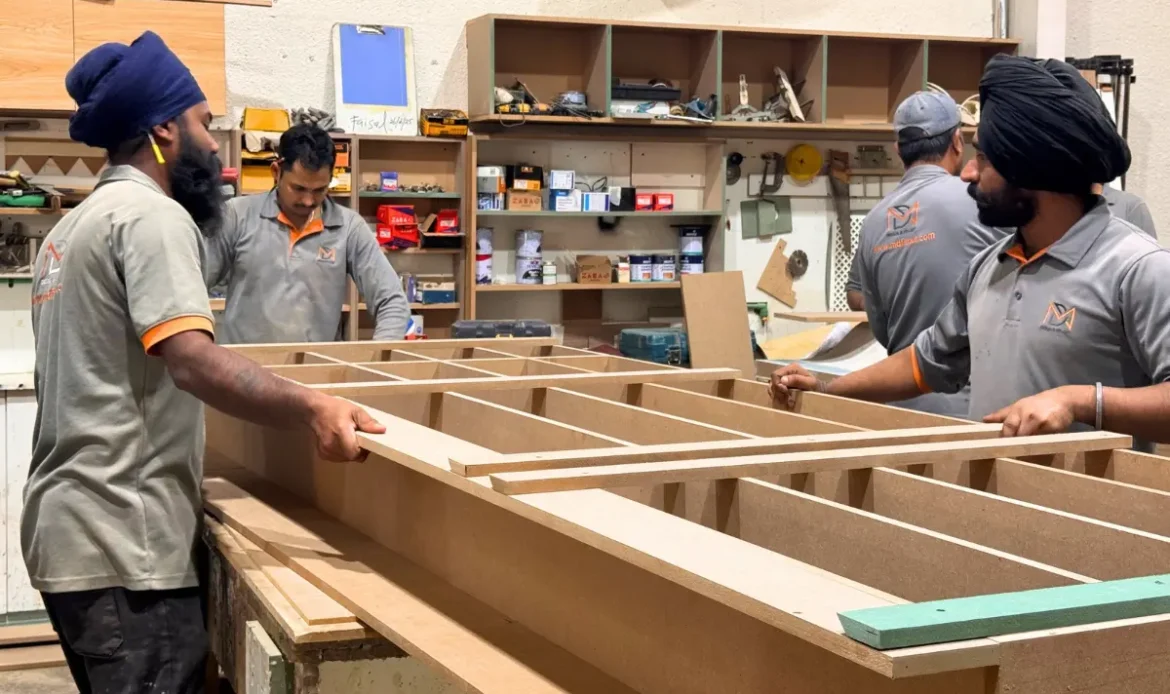
Use this short filter:
- Portfolio of similar projects: Residential, commercial or hospitality experience should match your job.
- Own factory or clear production partner: Ask where the work is made.
- Transparent itemised quote: Material, finish, hardware, installation and exclusions listed.
- Written drawings and sign-off process.
- References you can call: Previous clients and site visits.
- After-sales support: Who comes back when a hinge fails?
- Fit with your timeline: A realistic schedule beats an optimistic promise.
Compare at least three quotes. If one is far lower than the rest, ask what has been left out.
Conclusion
Custom joinery in Dubai rewards careful choices. The right core material, sealed edges, named hardware, and approved shop drawings protect your investment far more than a low headline price.
Fit, durability, and long-term performance matter more than catalogue looks. A well-made wardrobe or kitchen that matches your space and survives local conditions will outlast cheaper alternatives and save you from early replacements.
Use the checklists in this guide. Compare itemised quotes. Ask about the factory, the materials, and the installation process. When the details are clear, the finished result usually is too.
Frequently Asked Questions
What is custom joinery?
Made-to-measure woodwork such as kitchens, wardrobes, wall units and desks, designed and manufactured for a specific space.
What is the difference between joinery and furniture?
Joinery is usually fixed or built into the space. Furniture is freestanding. Bespoke work can cover both.
What is the best material for kitchen cabinets in Dubai?
Moisture-resistant MDF or marine plywood carcasses with sealed edges are widely recommended for local humidity, paired with a finish suited to your budget and style.
How much does a custom wardrobe cost in Dubai?
Published 2026 guides range from about AED 1,200 to 3,500 per linear metre at the lower end, to AED 7,000–14,000+ for premium builds. Get itemised quotes.
How long does custom joinery take?
Plan roughly 4–10 weeks from drawing approval for typical projects. Complex finishes and imported hardware take longer.
Do I need an interior designer?
Not always. Many joinery companies provide in-house design and shop drawings. A designer helps when joinery must coordinate with a full fit-out.
Can joinery be moved to a new home?
Usually only in part. Built-in units are made for a specific space. Freestanding bespoke pieces move more easily.
Is custom joinery worth it in a rented apartment?
Only with landlord permission, and often not for fixed units. Freestanding bespoke furniture is the safer choice.